
A bit of history to start with
Sheep's wool is one of the oldest textile materials humanity has used. In central and northern Europe, it was already used as basic protection against cold and harsh weather. The turning point came when people realized that it wasn’t necessary to kill sheep for their coats – you just had to shear them, and the wool you got could be felted or spun into yarn, which could then be knitted or woven.
Evidence of sheep shearing dates back to the Bronze Age, roughly 2,000–2,500 years BC. Finer types of wool were gradually bred in Asia Minor and Egypt, from where they made their way to Europe through trade. Spain later played a key role, being the only country in the 14th century to breed fine-wool Merino sheep. Exporting these sheep was strictly forbidden at the time under penalty of death.
Merino wool is a material that is very close to the human body – its chemical composition is similar to that of human hair and fur. That’s also why the old myth that wool has to be itchy has long been debunked.
What does merino actually mean?
Merino wool is a completely natural fiber that grows on Merino sheep all year round. Today, the most well-known production comes mainly from Australia – Australia supplies more than 80% of the world's Merino wool used for clothing and is considered its main hub.
Merino wool comes from long-term and careful breeding. The result is an exceptionally fine, soft, and highly functional fiber that is also biodegradable and renewable. These qualities make it a material that fits the growing interest in natural and eco-friendly products.
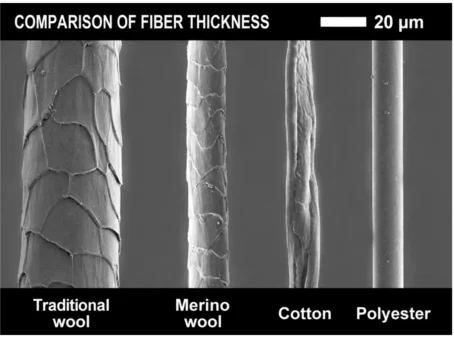
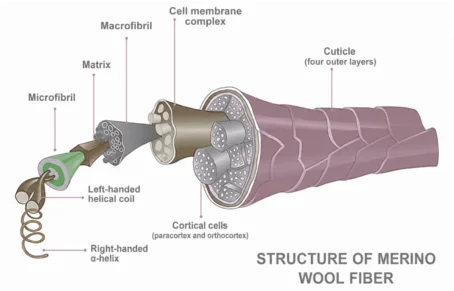
The specific structure of wool fibers, made up of fine scales, is one of the main differences compared to cotton, linen, or synthetic materials. Merino wool is often finer than 18 microns, making it pleasant to the touch and suitable even for sensitive skin. This fineness is exactly why Merino is commonly used for base layers of clothing – typically functional underwear like VoXX, designed to be worn directly on the body.
Why does merino have such exceptional properties?
Merino wool is an active material that responds to environmental conditions and the body's needs.
Degradability and renewable
Unlike synthetic fibers, merino naturally decomposes back into the soil after it has reached its end of life. It is also a fully renewable resource – sheep create a new fleece every year.
Working with moisture
Merino fibers can absorb water vapor up to 35% of their dry weight. Thanks to this, moisture does not accumulate on the skin, but is gradually transported away. The microclimate between the body and clothing remains more pleasant and drier.
Breathability and hygroscopicity
Merino wool can not only absorb moisture, but also release it again when conditions change. This is precisely why a person does not feel "sweaty" in it, even when moving more.
Temperature regulation
Wool naturally insulates, but also breathes. In the cold, it helps to retain heat, and in the heat, on the contrary, it prevents overheating. This protects the body from temperature fluctuations.
Comfort when wearing
The fine fibers, natural elasticity and ability to adapt to body movement make merino a material suitable for wearing directly against the skin - for example during exercise or yoga.
What does this mean in practice?
From the user's perspective, merino wool has a number of practical advantages:
Easier maintenance
The natural protective layer of the fibers repels dirt and reduces the formation of static electricity. Thanks to modern treatments, many merino products can also be washed in a washing machine.
Protection against UV radiation and fire
Wool naturally absorbs UV rays and, thanks to its moisture and nitrogen content, is also naturally fireproof.
Odor resistance
Odor molecules are locked in the fiber structure and are only released during washing. Merino clothing therefore stays fresh longer than conventional materials. This is one of the main reasons why VoXX merino socks are popular for traveling, hiking and wearing for several days without the need for frequent washing.
Shape stability and antistatic properties
Merino returns to its original shape after being stretched, stretches less and does not attract fluff or dust. In addition, it does not stick to the body when moving.
How to care for merino?
Caring for merino is not complicated, it just differs from caring for synthetic materials. Wool has natural self-cleaning properties due to its lanolin content, so it is often enough to simply air the products. However, it is always important to follow the care symbols on the label of a specific product. You can also find an overview of them on our website under the Washing symbols and care symbols tab.
A few words in conclusion
Traditional natural materials and contemporary demands for functionality meet today in merino products such as VoXX socks and VoXX functional underwear. Thanks to their high-quality workmanship, they are suitable for both active movement and everyday wear.